Create a Skill Tree
A Skill Tree is the basic blueprint for any Oppia Topic. It shows every skill a learner must master. To see how it fits in, review the Key Terms and how they relate to one another.
In this article, you will learn how to:
—
Build the Skill Tree Structure
To identify the Skills needed, start with the final learning goals and work backward. List out the questions a learner should be able to answer, then identify the specific skills required to solve them.
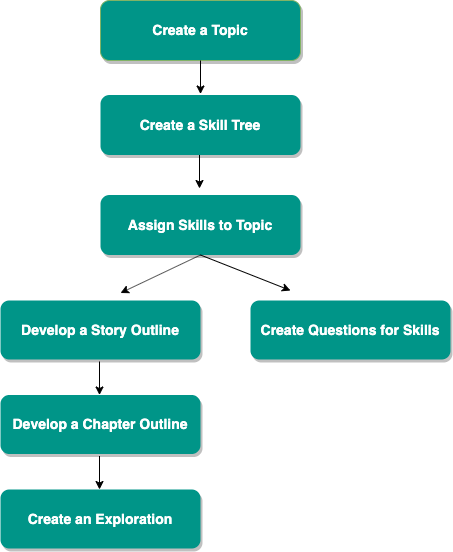
Fig. 1. Lesson creation process overview
A Skill Tree includes:
- 1. Atomic Skill Descriptions
Descriptions must be atomic, concrete, and specific. Describe observable behavior using the format: “Given X, compute/calculate/identify Y.”
Example: “Given a decimal number, state the place value of each digit.”
- 2. Review Material
This explains the concept to the learner. Review material and worked examples are shown if a learner struggles with questions linked to this skill.
Technical Requirement
You must publish both the Skill Description and Review Materials in Oppia for the skill to be valid.
- 3. Worked Examples
Provide a list of step-by-step solutions showing how the skill is used. You can enrich these with images, videos, or helpful links.
- 4. Misconceptions
Identify common mistakes learners make. For each misconception:
Provide a description so specific that a reviewer can predict the student’s exact wrong answer.
Ensure feedback is drafted for each misconception to be used in the Exploration’s answer groups.
- 5. Rubrics
Guidelines for question creators to ensure consistency across difficulty levels. The difficulty levels are defined as follows:
Easy: Questions where artificial help/scaffolding is provided, or the learner is only required to perform a small part of the skill (e.g., standard multiple-choice questions).
Medium: Straightforward, direct application of the skill without extra assistance or heavy scaffolding.
Hard: Questions that require a deeper conceptual understanding (moving beyond routine manipulation or rote recall) or those that require combining multiple distinct skills.
Tip
For more detailed guidance, see the Skill Tree Best Practices.
—
Improve a Skill Tree
- More is Better
Break down a topic into as many concrete skills as possible. The more granular the skills, the easier it is to pinpoint exactly where a learner is struggling. Watch out for “hidden” skills—prerequisites that aren’t explicitly taught in the current lesson but are required for success.
- Think Logically
Arrange skills in a “building block” sequence. A learner should be able to acquire Skill A without needing knowledge of Skill B, which comes later. This logical scaffolding is essential for a smooth learning path.
- Group Skills into Subtopics
Once arranged, cluster your skills into subtopics (e.g., “Decimal Concepts” within an “Introduction to Decimals” topic). This allows Oppia to offer focused practice sessions.
- Specify Prerequisite vs. Acquired Skills
Prerequisite Skills: Skills learned in previous topics or external knowledge required before starting. These trigger diagnostic “review questions” at the start of a lesson.
Acquired Skills: The specific abilities the learner will gain by the end of this specific lesson.